TS Conductor CEO Jason Huang Featured on T&D World Live Podcast

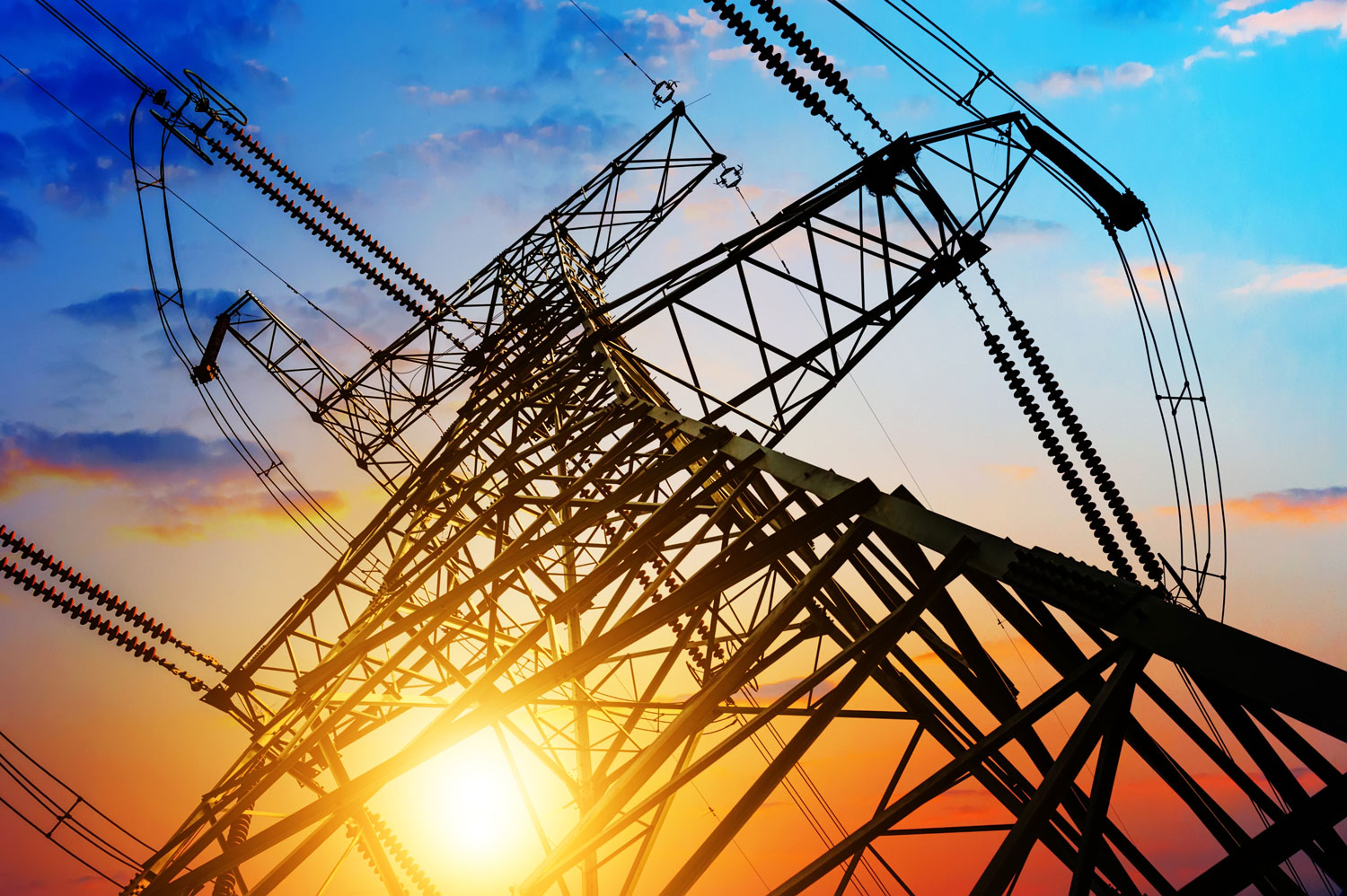
Multiple high-voltage power lines and transmission towers silhouetted against a colorful sunset sky with scattered clouds.

TS Conductor CEO Jason Huang Featured on T&D World Live Podcast

TS Conductor is proud to announce that its co-founder and CEO Dr. Jason Huang was featured as the guest on a recent episode of T&D World Live, in which he spoke with Editorial Director Nikki Chandler about conductor technology’s broader role in meeting rising demand from data centers, electrification, and extreme weather.

Drawing on more than 15 years in the advanced conductor space — including prior senior leadership roles at CTC Global, BAE Systems, Owens Corning, and Solvay — Jason walked Chandler through the limits of century-old conductor technology, where first-generation advanced conductors missed the mark, and how Aluminum Encapsulated Carbon Core (AECC) technology is giving utilities a different path forward on capacity, affordability, resilience, speed to deploy, and safety.

“When we talk about the grid, the challenges are capacity-constrained,” Jason told Chandler. “Conductor technology… is a constraint today because we are still relying on century-old technologies. But it is also an opportunity — an enabler — if we have the right conductor technology.”

The conversation covers what separates next-generation AECC from the first-generation advanced conductors utilities may have tried years ago, and why workability in the field — that is, by the linemen who actually install the product — has been central to TS Conductor’s design philosophy from day one.

“Our industry is conservative for a good reason,” Jason said. “We also have expectations in safety, reliability, and resiliency… For a utility to adopt a technology, they expect conductors without prudent risk, and TS is exactly designed for no prudent risk.” 

Jason and Chandler also dig into specific utility project outcomes — including a reconductoring project where choosing TS over ACSS saved approximately 40% in total project CAPEX and reduced 12 months out of a 15-month schedule — as well as new transmission builds where TS has helped utilities win competitive FERC 1000 projects.

The episode touches on the testing record behind TS Conductor’s performance claims, including work with Argonne National Laboratory, Kinectrics Lab, and AEP, along with a forthcoming industry-first product certification program for advanced conductors being launched in partnership with Kinectrics.

Jason closed the conversation by reflecting on the road ahead:

“I really look forward to working with all of our utility customers and helping them transform our power grid.”

Listen to the full episode here:

Tackling Grid Challenges with AECC: The TS Next-Generation Advanced Conductor

More blogs & articles.

See All Blogs & Articles
Electricity pylons in a grassy field under a blue sky with clouds
06/16/26

Advanced Epoxy Systems: Engineering and Proving Thermal Stability in Encapsulated Cores (Part Two)

A composite core spends its life inside an aluminum encapsulation that keeps moisture, oxygen, ultraviolet, and ozone away from the resin, and the same barrier that locks those out also locks in anything the resin gives off.

High-voltage power lines and pylons stretch across a hilly landscape at sunset, with a distant city skyline visible beneath a partly cloudy sky.
06/16/26

Advanced Epoxy Systems: How Resin Chemistry Determines Thermal Stability (Part One)

Conductor evaluation concentrates on the carbon fiber core, and for an obvious reason: the fiber carries the load, and its strength-to-weight ratio is what lets a composite core beat steel at a fraction of the weight. But the fiber can't do any of that on its own. It sits in a cured epoxy that holds the filaments in alignment and moves load between them, and how that epoxy behaves as it heats is what sets the limit on how long the core keeps its rated strength.

Two workers in a lift perform maintenance on high-voltage power lines next to an electricity transmission tower under an orange sky.
05/15/26

Credible Validation: Evaluating Test Reports (Part Two)

TS Conductor outlines what utility engineers should look for when evaluating conductor test reports, including the importance of independent validation, accredited laboratories, standards-based testing, and real-world performance verification.

Lattice Structure
Blog
05/01/26

Credible Validation: Why Independent Testing Matters (Part One)

TS Conductor examines why independent, accredited testing is essential for evaluating advanced conductor technologies and outlines the key red flags utility engineers should watch for when reviewing technical claims and test reports.